
Canton Township Previous Residents Sources
A backward address trail uses a mix of current property context and dated historical evidence. The source that establishes a recorded transfer is not the one that establishes a census household, and a newspaper mention has a different weight again. Start with a known address and parcel, then choose the next source by era. Record the source title, date, image or page reference, address form, and whether a person was an owner, occupant, or only mentioned.
| Source | Years it can cover | Where held | What it can show |
|---|---|---|---|
| Canton BS&A and CIGIS | Current public assessment and mapping display | Canton Township | Parcel, legal description, building context, map location, and displayed owner. |
| Wayne recorded-land index | Online wording differs: January 1, 1960 on search services; “after 1986” on the main page | Wayne County Register of Deeds | Recorded deeds, plats, mortgages, releases, and a chain of instruments. |
| Permit and plot-plan material | Historic online coverage not located | Canton Building, Planning, or FOIA route | Targeted construction, planning, split, combination, or land-change context. |
| Canton Observer archive | Approximately 1974 to 2022 | Canton Public Library archive | Dated reporting, notices, obituaries, development, or community context. |
| Federal census schedules | Individual schedules through 1950 | National Archives and research repositories | A historical household snapshot, subject to the 72-year access restriction. |
| Wayne directory lead | Selected 1925 to 1935 directory material | National Archives guide | A Wayne County lead, not proof of a Canton-specific directory run. |
For a recent transfer, begin with the parcel and deed chain. For a much older household question, begin with a legal description or historic map, then pair a land record with a census or dated publication. Do not fill a missing period by assuming a person remained at the address.
Canton Township Address First
Normalize the property before tracing previous residents. Search Canton addresses with and without directional prefixes, use both abbreviated and spelled-out street suffixes, and preserve apartment, unit, or lot details. Either 48187 or 48188 may appear in a search path, but a ZIP is postal geography rather than a legal property boundary. The stable handoff is the parcel number plus the displayed legal description.
Begin with the Canton BS&A property inquiry, then use the CIGIS parcel layer to compare the address with parcel geometry, road position, development, and adjacent land context. The map and assessor card are separate sources. Use the assessor for field-specific property facts and the map to confirm where the parcel sits.
The address trail is: street address → verified parcel → legal description or lot/unit wording → recorded instrument → earlier instrument. A name-only result is weaker than an exact address-and-parcel match, especially where a common surname, estate, trust, or entity appears in the record.
Canton Township Past Residents Deeds
Previous residents research starts with past owners, but ownership is only one layer of the story. Wayne County’s Register of Deeds is the official custodian for recorded land instruments. Use the current assessment display to locate a parcel and legal description, then follow instruments backward. Every link should include the document type, recording date, document number, grantor, grantee, and legal-description comparison.
- Confirm the current property’s parcel number, legal description, and displayed owner in Canton’s assessor record.
- Search the current owner or legal description in the Wayne County land-record index and locate the recorded purchase deed or other transfer instrument.
- Read the prior party carefully. The seller in the later deed is often the grantee, or receiving party, on an earlier purchase deed.
- Search backward one recorded instrument at a time, comparing the legal description and any plat, unit, or lot wording at each change.
- For an older gap, ask the Register about the appropriate historic books, tract index, office research, or copy route instead of declaring that the property has no earlier record.
The Wayne Register of Deeds history explains that older hand-indexed books and tract materials coexist with later technology. A broad county index does not mean every older image is online or easy to locate.
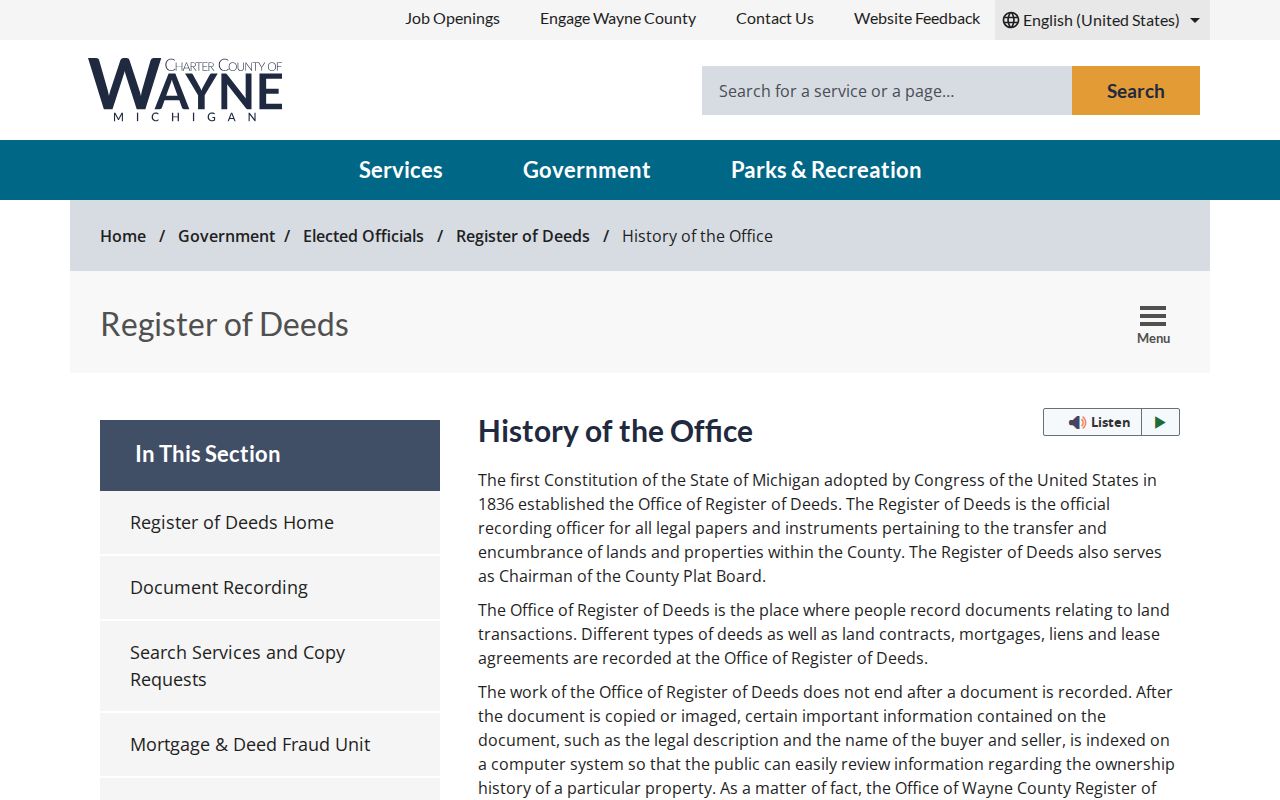
The Register’s history is a useful reminder to preserve both the historical index form and the exact recorded-instrument details when the address trail reaches an older period.
The Register’s search-services information describes free name-oriented searching and expanded On-Demand searching by address, legal description, parcel or tax ID, and related keys. Its coverage wording is not fully consistent across official pages. Test the date needed, then use the official office, mail, or certification route for a copy that must stand as proof.
Canton Township Deed Terms
Land-record vocabulary keeps the backward trail understandable. The street address helps begin a search, but the legal description is the durable comparison point when a property changed from farm land to a subdivision lot, condominium unit, or planned development. Treat a recorded deed as an instrument in a chain, not as an automatic statement about where a party lived.
- Grantor
- The person or entity transferring an interest in a recorded instrument.
- Grantee
- The person or entity receiving an interest in that instrument.
- Chain of title
- A sequence of recorded instruments connected by property description. It may need plats, releases, assignments, and professional review.
- Legal description
- The recorded description of land or a unit, such as lot, subdivision, or condominium wording. It can survive address-format changes.
- Enumeration district
- The census area used by enumerators. It helps locate a historical household when a modern address does not map cleanly to an older schedule.
An index result is not a certified title report. If a transfer affects estate, ownership, or legal rights, request the actual instrument and seek professional title or legal advice when the recorded chain is complex.
Canton Township Previous Residents Maps
CIGIS can add geographic context to previous residents research through parcels, parcel lines, roads, buildings, developments, zoning, cemeteries, and aerial photography from multiple years. Aerials can show a physical change over time, while a plat or condominium record explains how lots and units were laid out. Do not use an aerial alone to identify a person, date an occupancy, or assume a building’s purpose.
Canton’s official history material places the first township hall at Canton Center and Cherry Hill in 1874 and describes an earlier agricultural community. That local history is valuable context when a parcel trail reaches an old road, school area, cemetery, farm tract, or later subdivision. It is not proof that a particular address existed in the same form in 1874.
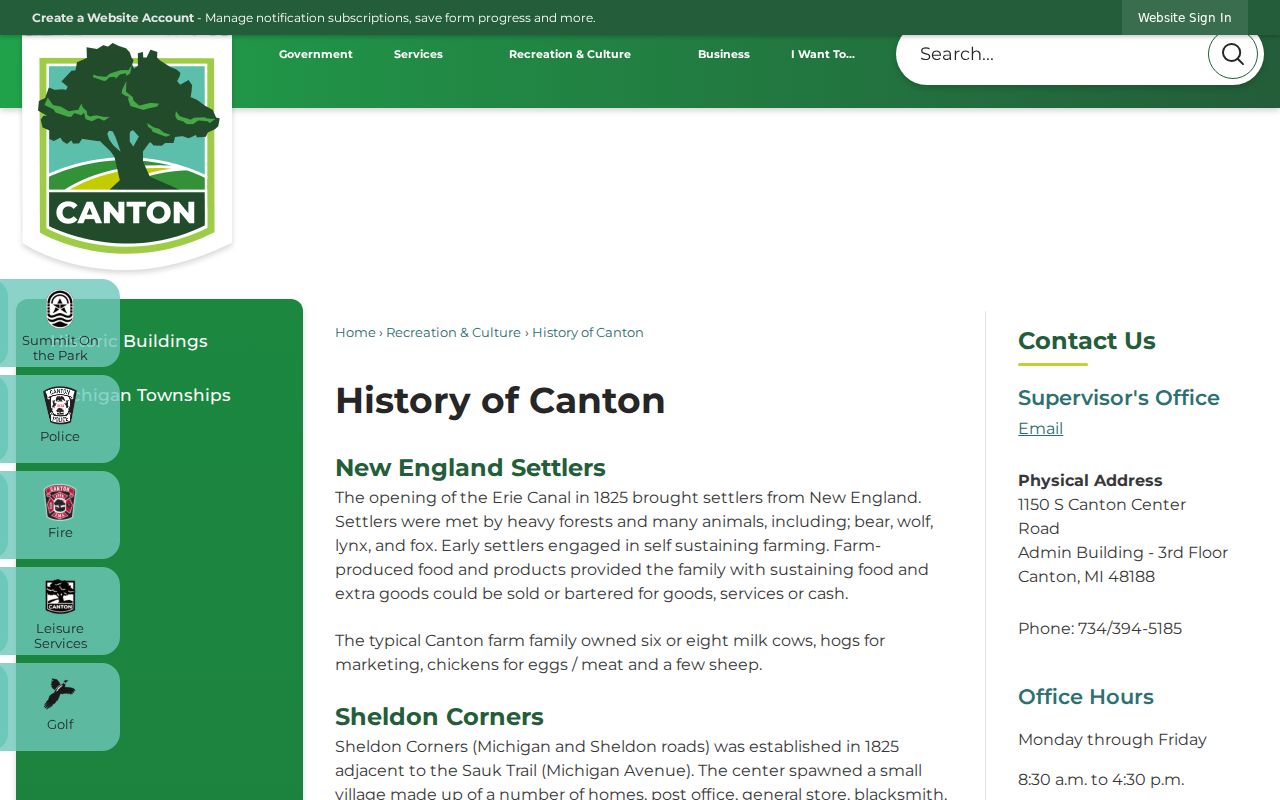
The Township history source supplies place-based context that can guide searches for road names and landmarks without replacing a dated property record.
Canton now has subdivisions, condominiums, planned developments, and more than 200 homeowners associations according to the Master Plan. The contrast between earlier farm tracts and modern development is a records story: an address can lead to a parcel card, plat, declaration, assessment record, and private association contact route, each with a separate purpose.
Canton Township Past Residents Permits
Building and planning files can give a house-history trail a useful date, but they do not create a directory of previous residents. Canton’s permits page says qualifying residential plot-plan searches are available through Building and lists contacts for building, planning, engineering, land-record changes, and property splits or combinations. A permit may show work, review, or a project contact; it does not by itself prove ownership, occupancy, or private association approval.
The research did not locate a complete public historical permit or code-case index for Canton Township. Use the Canton permits route first. When a record requires a request, Canton’s FOIA page supports a narrow description by department, record type, address or parcel, date range, and desired format. Canton accepts online NextRequest submissions and paper requests. Michigan FOIA generally has a five-business-day response framework with a possible written ten-business-day extension.
Note: Keep a permit record distinct from a deed, census, or newspaper item, because each records a different event at a different time.
Canton Township Household Trail
After the deed chain establishes a dated property trail, look for evidence of who lived there before. Federal census schedules through 1950 can show names, ages, relationships, and street addresses depending on the census year. A census is a snapshot on its enumeration date, not proof of an all-year household or property ownership. Individual schedules from 1960 and later remain closed under the National Archives’ 72-year restriction as of the research date.
Use a household process flow: deed or assessment date → matching census year when available → dated newspaper or obituary item → another property record. Compare the address, relationship, and date across at least two independent sources. If an address changed form, work from the legal description, historic road name, or enumeration district rather than forcing the modern address into a census search.
The National Archives city-directory guide identifies selected Wayne County directory microfilm for 1925 to 1935. It is a research lead, not evidence that Canton Township had a complete city-directory or address-reverse run in those years.
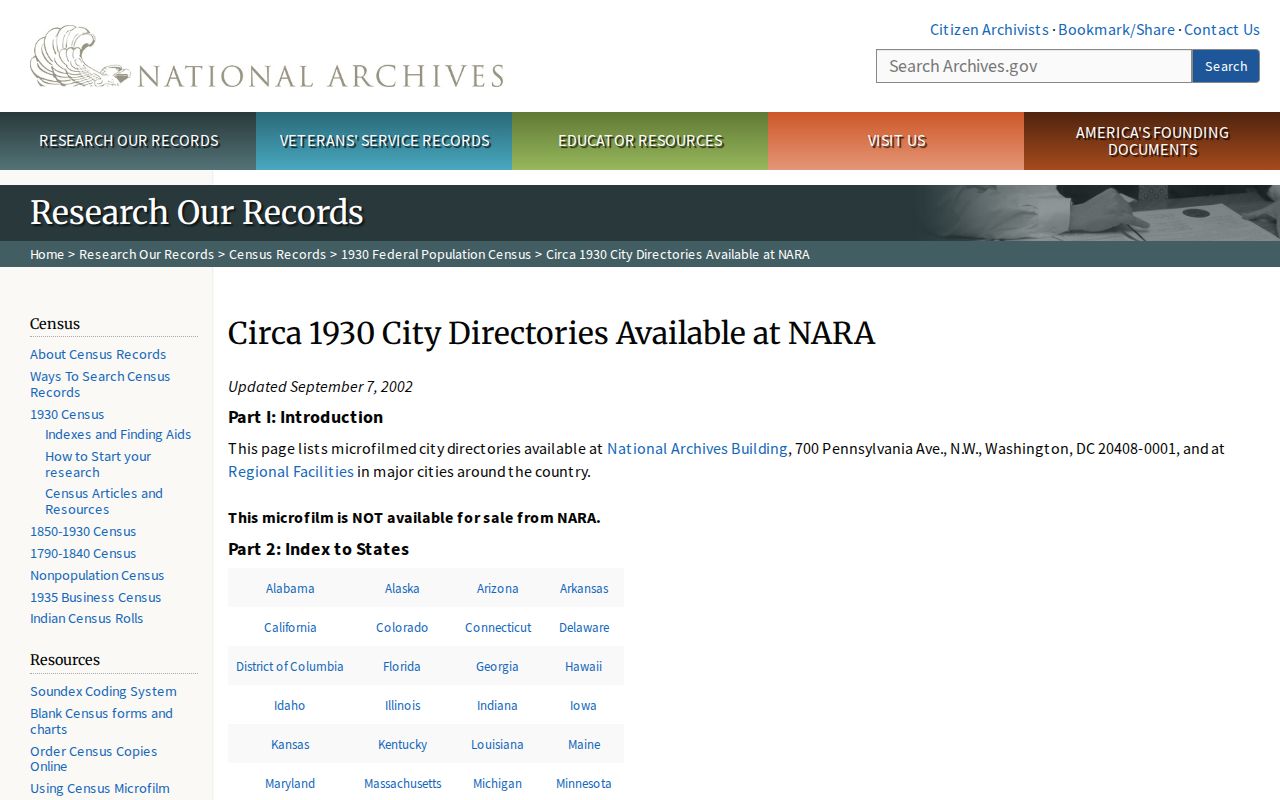
The federal guide helps set the right scope for historical searching: check the title, geographic coverage, year, and entry form before calling a result a Canton address match.
Canton Township Directory Gap
No official source located in this research gives a year-by-year Canton-specific printed directory run, a current local reverse directory, a public utility-customer list, or a complete historic household roster. The Canton Public Library genealogy pages do offer the Canton Observer archive, Michiganology links, Sanborn maps, newspapers, history databases, and other local research paths. Ask the library reference desk for holdings, publishers, years, township coverage, and whether a volume is Canton, Detroit, or broader Wayne County.
The Observer archive covers roughly 1974 to 2022 and its OCR can miss or misread names. Search short distinctive terms, street names, landmarks, and variant spellings, then save the issue date, page, headline, and image link. A property notice, anniversary, school item, obituary, zoning hearing, or civic story remains published reporting, not a certified identity record.
The collections and access routes themselves are kept with the Canton Township city directory collections. For an address trail, use a confirmed dated directory or newspaper entry as one piece of evidence, never as a present-day contact claim.
Canton Township Previous Residents Archives
When an online chain stops, “not online” and “does not exist” are different conclusions. The Archives of Michigan explains custody for county, township, court, probate, clerk, treasurer, and other local-government series. Its Wayne County guide identifies probate case files, estate files, calendars, wills, journals, tax records, and other county materials. These are finding aids, not promises that every series is digitized or indexed by a Canton address.
Use the Archives of Michigan local-government records guide to identify the relevant series and custodian. Record the series title, date range, creating agency, box, folder, or volume reference. Canton Archive searches can use keywords, collection or archive, time period, and start or end dates for public municipal or website material; ask the Clerk or Archives which office has the authoritative historical record.
Historic jurisdiction also matters. Wayne County’s boundaries and municipalities changed over time, and a property may appear under a township, village, school district, post office, or other designation that differs from its modern mailing address.
Canton Township Previous Residents Limits
Previous residents are not established by a parcel owner label, a deed grantee, an old newspaper name, or a ZIP alone. Each historical result must carry its date and source type. A property may have a recorded owner who never lived there, an occupant who is absent from the land record, or a historical mention that is too weak to match to an address. A no-result can reflect an unavailable source, an indexing gap, a protected record, or a differently written address.
Keep house-history research focused on family history, local history, estate questions, property context, and a specific official record. Do not use historical address material to locate, contact, or expose a living person. Substitute addresses used by Michigan’s Address Confidentiality Program must never be reverse-engineered or combined with other sources to infer a real residence.
Lawful use. Canton Township previous-residents research should remain dated, source-specific, and respectful of privacy. Do not use a house-history trail to stalk, harass, intimidate, or harm any person.